Enterprise database architecture & Scalability Services
Build a Database Infrastructure That Grows With Your Business A database usually works perfectly in the beginning. The application is fast. Reports generate quickly. Users are happy. Then the business grows. More customers. More transactions. More integrations. More data. And suddenly, the same database that once handled everything smoothly starts becoming the reason operations slow down.
Pages take longer to load. Reports fail during peak hours. Batch jobs spill into business time. Infrastructure costs rise. Teams start hearing the same sentence repeatedly: “The system is slow again.”
Most businesses don’t fail because of bad applications.
They struggle because their database architecture was never designed for long-term scalability.
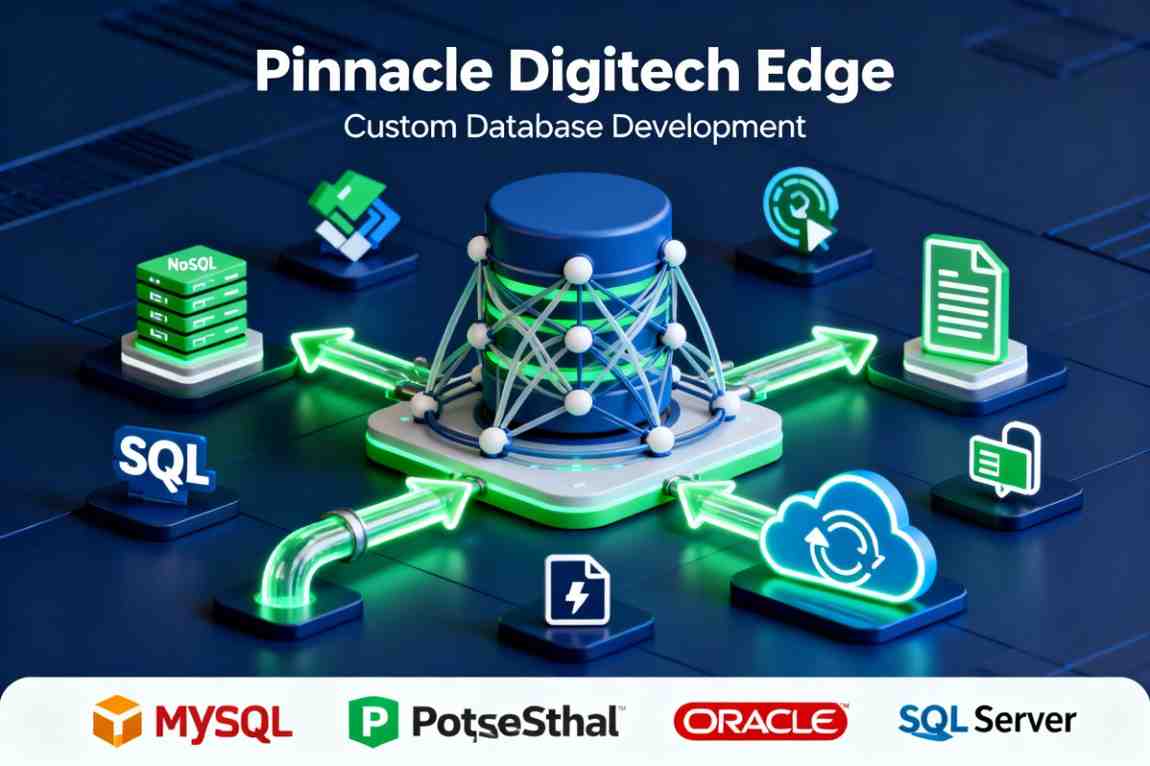
At Pinnacle Digitech Edge , we help organizations design, modernize, and optimize enterprise database architectures that support business growth, high-volume workloads, and mission-critical operations without performance bottlenecks.
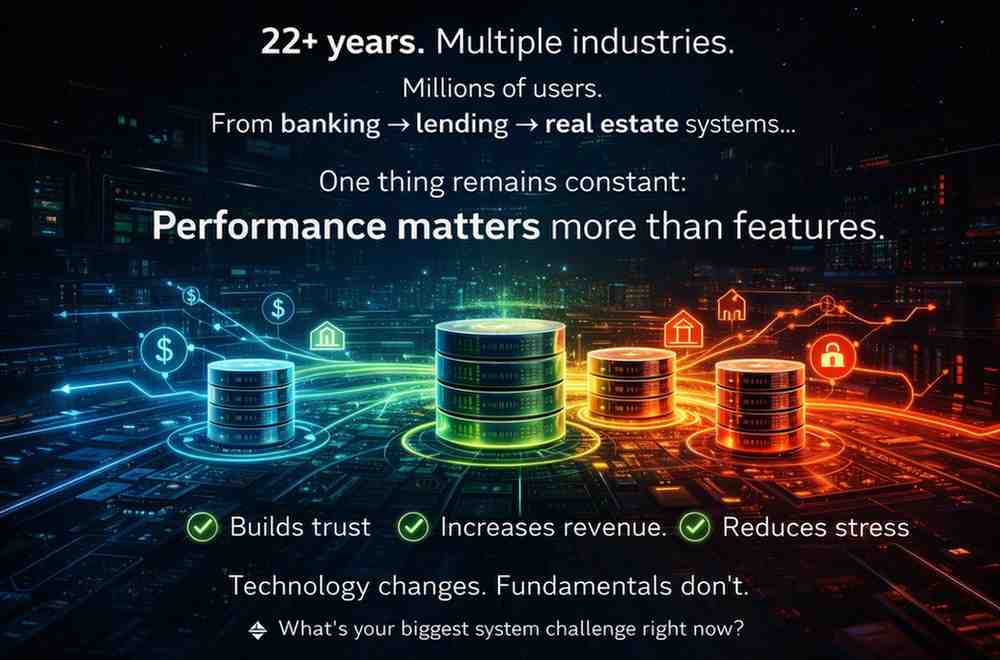
With years of experience managing enterprise-scale database environments, large transactional systems,enterprise database architecture and TB-level data platforms, we help businesses build scalable, stable, and future-ready database infrastructures.
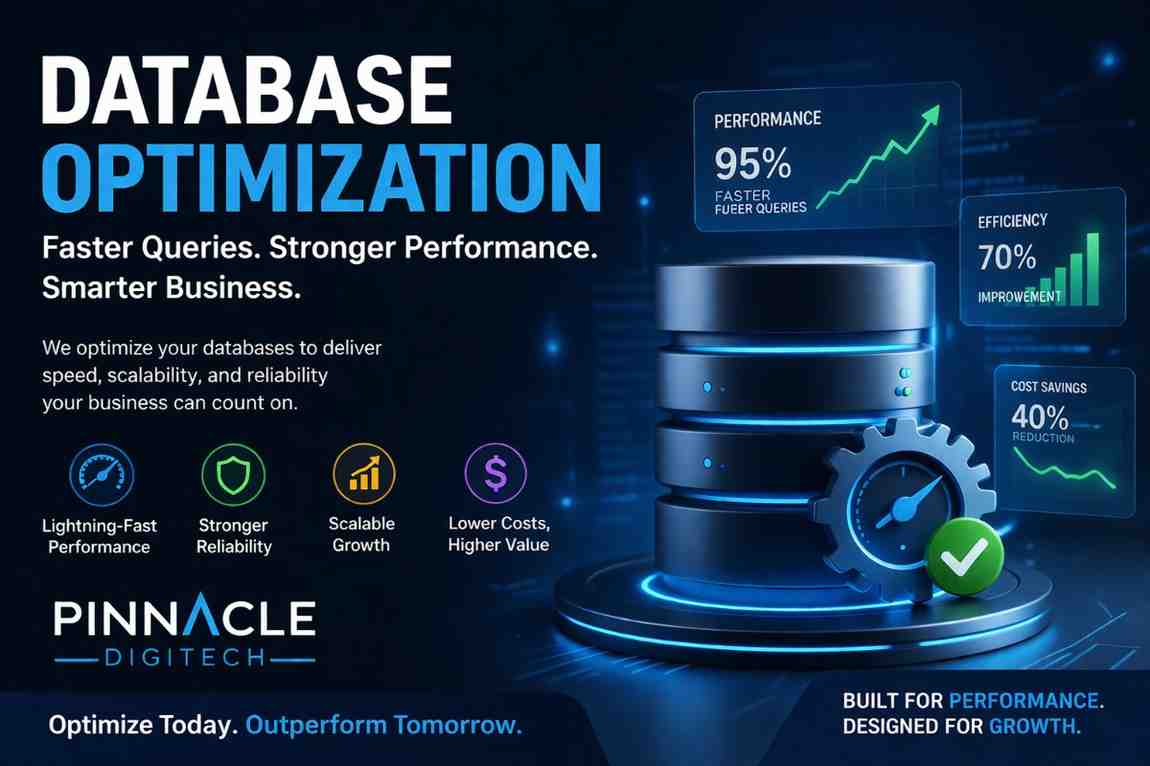
What Is Database Systems Optimization?
Database systems optimization is not only about speeding up queries.
It’s about designing an entire database ecosystem that can:
- scale with business growth
- handle increasing workloads
- maintain stability under pressure
- support high availability
- improve operational efficiency
- reduce infrastructure waste
A properly optimized database architecture improves both technical performance and business productivity.
The truth is enterprise database architecture database systems inefficiency is one of the most expensive invisible problems in modern enterprises.
Our Enterprise Database Architecture Services
Enterprise Database Architecture Consulting
A poorly designed database creates long-term operational challenges.
We help businesses build scalable database architectures that improve:
- transaction processing
- data consistency
- reporting performance
- application responsiveness
- operational reliability
Our database architecture consulting services include:
- enterprise database design
- enterprise database architecture
- schema architecture planning
- normalization and denormalization strategies
- multi-tenant database design
- distributed database architecture
- high-volume transaction design
- database dependency optimization
We create architectures designed for long-term scalability rather than short-term fixes.
Database Scalability Optimization
As businesses grow, database workloads increase dramatically.
Without proper scalability planning, systems become unstable and expensive to maintain.
Our database scalability services help organizations:
- manage large data growth
- improve concurrent transaction handling
- optimize storage performance
- reduce infrastructure strain
- improve application scalability
We implement:
- table partitioning strategies
- workload balancing
- indexing architecture improvements
- archive management planning
- database resource optimization
- horizontal and vertical scaling strategies
This allows businesses to scale operations without sacrificing performance.
.
High Availability Database Solutions
Downtime directly impacts revenue, operations and customer trust.
We design high availability database environments that improve business continuity and minimize operational risk.
Our high availability services include:
- failover architecture planning
- database replication setup
- disaster recovery planning
- backup strategy optimization
- redundancy architecture
- clustering support
- database resilience improvements
We help businesses reduce downtime risks while ensuring operational stability.
Legacy Database Modernization
Many organizations still rely on aging database systems that struggle with modern workloads.
Legacy environments often create:
- performance bottlenecks
- integration challenges
- security risks
- maintenance complexity
- rising operational costs
We modernize legacy database infrastructures through:
- schema restructuring
- platform migration support
- architecture redesign
- database consolidation
- cloud readiness optimization
- workload redistribution
This helps businesses improve efficiency while preparing systems for future growth.
Capacity Planning & Database Infrastructure Assessment
One of the biggest reasons databases fail is poor capacity planning.
We analyze:
- transaction growth patterns
- storage trends
- concurrent user loads
- processing workloads
- reporting demands
- infrastructure utilization
Our database infrastructure assessments help organizations prepare for future scaling requirements before performance problems occur
Industries We Support
We provide enterprise database architecture consulting for:
- Banking & Financial Services
- Healthcare
- Manufacturing
- Retail & E-commerce
- Logistics
- Telecom
- Education
- Insurance
- SaaS Platforms
- Enterprise ERP Systems
Our experience across industries helps us design scalable database environments tailored to real business operations.
Why Businesses Choose Pinnacle Digitech Edge
22+ Years of Enterprise Database architecture Experience
We have worked with:
- enterprise applications
- high-volume transactional systems
- TB-scale databases
- reporting systems
- batch processing environments
- mission-critical business applications
Our solutions are based on real operational experience, not theoretical recommendations.
Business-Focused Database Consulting
We don’t optimize databases only for technical benchmarks.
We optimize them for:
- faster business operations
- better application stability
- improved user experience
- operational continuity
- long-term scalability
Scalable & Future-Ready Solutions
Many database problems appear because systems were designed only for current requirements.
We build Enterprise Database architecture that support future growth, higher workloads, and expanding business operations.
Common Challenges We Solve
Businesses approach us when they face:
- database scalability issues
- increasing transaction delays
- infrastructure bottlenecks
- storage growth problems
- unstable enterprise applications
- reporting performance issues
- architecture limitations
- database resource exhaustion
- high database maintenance costs
- system growth challenges
We help organizations stabilize operations while preparing infrastructure for long-term expansion.
Technologies We Support
Our expertise includes:
- Oracle Database
- Microsoft SQL Server
- PostgreSQL
- MySQL
- MongoDB
- Hybrid database environments
- Cloud database platforms
- Enterprise reporting databases
Frequently Asked Questions
What is database systems optimization?
Database systems optimization involves improving database architecture, scalability, infrastructure efficiency, and operational performance to support stable business operations.
How do I know if my database architecture needs optimization?
Common signs include:
- slow application performance
- increasing downtime
- storage growth issues
- unstable reports
- poor scalability
- rising infrastructure costs
Do you support enterprise-scale databases?
Yes. We specialize in enterprise database architecture handling large transaction volumes, complex reporting systems, and high-growth workloads.
Can you modernize legacy databases?
Absolutely. We help businesses redesign, optimize, and modernize outdated database infrastructures for better scalability and operational efficiency.
Do you provide cloud database architecture consulting?
Yes. We support cloud-ready database architecture planning, migration strategies, and scalability optimization for modern infrastructure environments.
Build a Scalable Database Foundation for Long-Term Growth
Your database infrastructure should support business growth — not limit it.
At Pinnacle Digitech Edge, we help businesses design scalable, resilient, and enterprise-ready database systems built for performance, stability, and future expansion.
If your organization is struggling with scalability limitations, database architecture challenges, or infrastructure bottlenecks, our experts are ready to help.
Contact Pinnacle Digitech Edge
Partner with Pinnacle Digitech Edge for enterprise database architecture and scalability solutions designed for modern business operations.